AI Agent Use Cases: Real Scenarios
Unlocking Potential: Exploring Powerful ai agent use cases for Today’s World
The world of technology is rapidly evolving, and at the forefront of this transformation are intelligent agents – sophisticated tools designed to automate tasks and enhance decision-making across various industries. What exactly are ai agent use cases? Simply put, they are the practical applications of artificial intelligence that involve autonomous entities capable of perceiving their environment, reasoning, and taking actions to achieve specific goals. These aren’t science fiction anymore; they are tangible solutions impacting how businesses operate, individuals manage their lives, and even how financial markets function. This post delves into the exciting landscape of these agents, exploring their potential, practical applications, and the considerations for successful implementation.
Streamlining Customer Service with Intelligent Agents
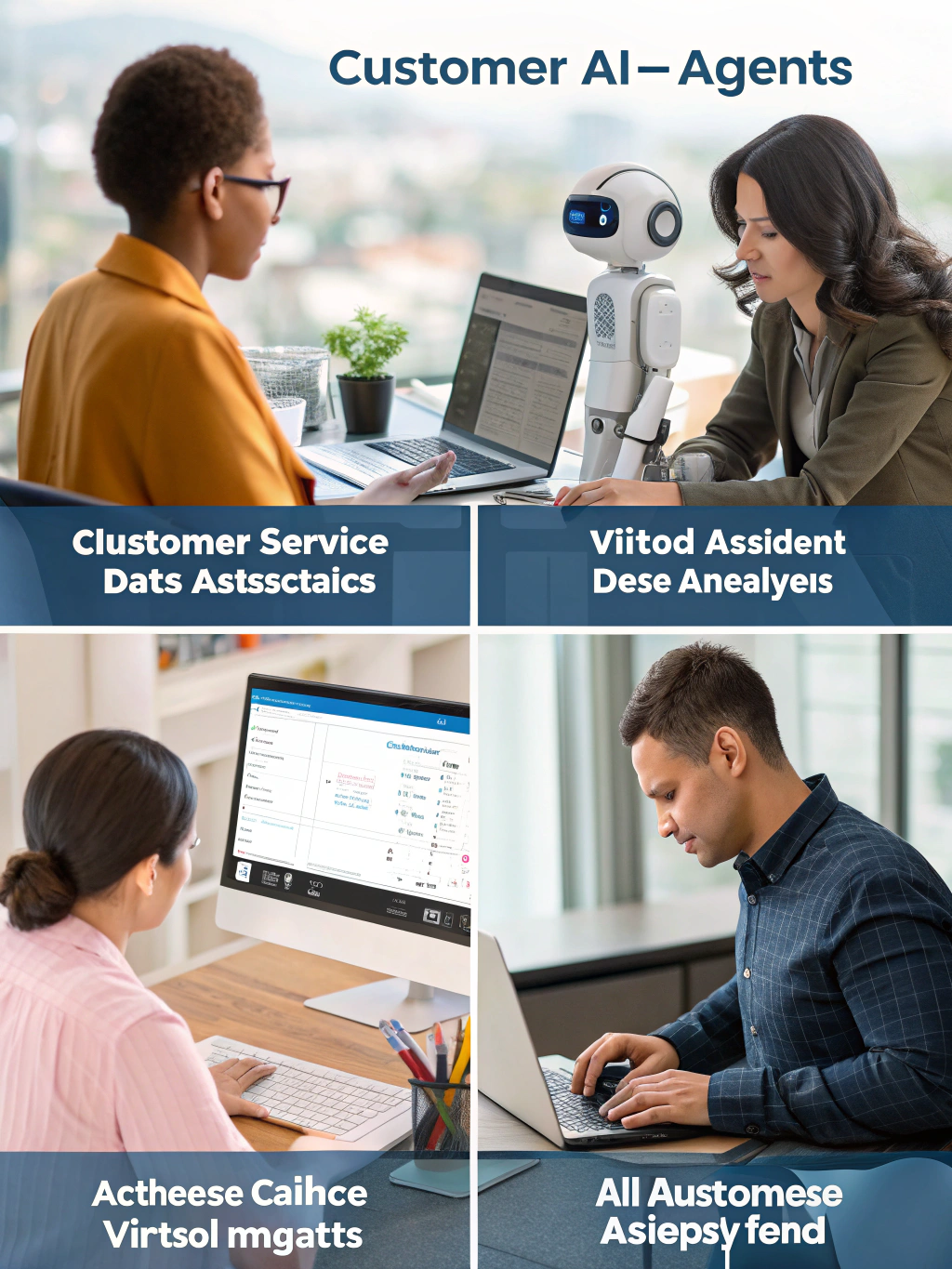
One of the most visible and rapidly adopted applications of intelligent agents is in customer service. Imagine a system that can instantly understand a customer query, access relevant information from various databases, and provide a helpful response – all without human intervention. This is becoming a reality. AI-powered chatbots and virtual assistants are handling routine inquiries, troubleshooting common issues, and routing complex requests to human agents.
- 24/7 Availability: Agents operate around the clock, ensuring customers receive support regardless of time zones.
- Reduced Wait Times: Instant responses improve customer satisfaction and efficiency.
- Cost Savings: Automating repetitive tasks frees up human agents to focus on more complex issues.
However, a common pitfall is over-relying on automation for nuanced or emotionally charged situations. Beginners often struggle to configure agents to handle complex sentiment or unexpected requests, leading to frustrating customer experiences. The fix? Implement robust escalation paths to human agents and continuously train the agent on diverse interaction scenarios.
Revolutionizing Financial Analysis and Investment Strategies
The financial sector is increasingly leveraging sophisticated tools, and agents are playing a crucial role. These tools can analyze vast datasets of market information, identify patterns, and even execute trades, significantly impacting investment strategies. Looking into agent examples in finance, algorithmic trading powered by AI agents is a prime example.
- Algorithmic Trading: Agents can execute trades based on predefined rules and market conditions, often at speeds and frequencies unattainable by humans.
- Risk Management: These agents can continuously monitor portfolios and identify potential risks, suggesting adjustments to mitigate losses.
- Fraud Detection: AI agents can analyze transactions in real-time to identify and flag suspicious activity.
A critical consideration here is the need for transparency and regulatory compliance. Beginners might underestimate the complexities of backtesting and validating an agent’s performance before deploying it in live markets. Always start with smaller allocations and thoroughly monitor results.
Enhancing Operational Efficiency Through Automation
Beyond customer service and finance, ai agent use cases are transforming various operational aspects of businesses. This includes automating data entry, scheduling meetings, managing supply chains, and performing quality control.
- Workflow Automation: Agents can automate repetitive tasks, freeing up employees to focus on higher-value activities.
- Data Analysis: Intelligent agents can quickly analyze large datasets to identify trends and insights.
- Process Optimization: By monitoring and analyzing operational processes, agents can identify bottlenecks and suggest improvements.
One common mistake here is failing to properly define the scope of automation. Trying to automate too much at once can lead to system instability and errors. Start with well-defined, isolated tasks and gradually expand the scope as the agent proves its reliability.
Practical Experience & Real Use Case: Automated Content Summarization
Let’s consider a content marketing team struggling to keep up with the ever-increasing volume of information. They need to quickly digest lengthy reports, articles, and research papers to extract key insights. Implementing an intelligent agent trained on natural language processing can be a game-changer.
Step 1: Tool Selection: Choose an agent platform with robust summarization capabilities. Many cloud providers offer pre-trained models or allow fine-tuning.
Step 2: Data Input: Feed the agent the documents you want summarized. This might involve uploading files or providing URLs.
Step 3: Configuration: Define the desired length and focus of the summary. For example, specify the number of sentences or the key topics to highlight.
Step 4: Review & Refinement: Initially, review the agent’s output carefully, making adjustments to improve accuracy and relevance.
Step 5: Integration: Integrate the agent into your existing workflow. Perhaps use it to generate brief summaries for internal briefings or to create social media snippets.
Common Beginner Mistakes:
- Insufficient Training Data: Using a generic agent without fine-tuning it on your specific content can lead to irrelevant summaries.
- Overly Broad Scope: Asking the agent to summarize extremely long or complex documents can overwhelm its processing capabilities.
Fix: Provide the agent with targeted training data and break down large documents into smaller, more manageable chunks.
Limitations and Drawbacks
While promising, intelligent agents aren’t a panacea. They rely on the data they are trained on, and biases in that data can lead to skewed or unfair outcomes. Furthermore, agents often lack the common sense reasoning and adaptability of humans, making them unsuitable for highly unpredictable or ambiguous situations. Data privacy and security are also paramount concerns.
Comparison: Agent Platforms
| Feature | Platform A (e.g., IBM Watson Assistant) | Platform B (e.g., Google Dialogflow) | Platform C (e.g., Microsoft Bot Framework) |
|---|---|---|---|
| Ease of Use | Moderate | High | Moderate |
| Customization | High | Medium | High |
| Scalability | High | High | High |
| Pricing | Subscription-based | Pay-as-you-go | Consumption-based |
| Integration | Extensive | Good | Good |
Snippet-Ready Answer:
What’s a key benefit of using ai agents? They offer 24/7 availability and can handle large volumes of tasks simultaneously, significantly improving efficiency and responsiveness.
Frequently Asked Questions
How do ai agents learn?
They learn through various methods, including machine learning algorithms that analyze data and identify patterns, adapting their responses and actions over time based on new information.
Are ai agents expensive to implement?
The cost varies greatly depending on the complexity of the agent, the platform used, and the resources required for training and maintenance. There are options for various budgets.
Can ai agents replace human workers entirely?
While agents can automate many tasks, they are not intended to completely replace human workers. They are best used to augment human capabilities and handle routine tasks, allowing humans to focus on more complex and creative work.
What level of technical expertise is required to use ai agents?
The required expertise varies depending on the platform and the complexity of the agent. Some platforms offer user-friendly interfaces that require minimal technical skills, while others require more advanced programming knowledge.
Conclusion
The potential of ai agent use cases is vast and continues to expand. From streamlining customer service to revolutionizing financial analysis, these intelligent tools are transforming industries and creating new opportunities. While challenges and limitations exist, the ongoing advancements in artificial intelligence promise an even more impactful role for agents in the years to come. If you’re looking to explore these powerful tools for your business or personal life, there’s a wealth of information available – and the journey is only just beginning.
Ready to dive deeper? Share your thoughts on the potential of intelligent agents in the comments below, or explore our other articles for more insights on leveraging technology for success!
Share this content:













Post Comment