AI Agent Architecture Explained
Navigating the Future with Intelligent Automation: Understanding AI Agent Architecture
The world of technology is rapidly evolving, and at the forefront of this transformation lies intelligent automation. One of the most exciting developments is the rise of ai agent architecture. This is no longer a futuristic concept; it’s a present-day reality reshaping how businesses operate and individuals interact with technology. At its core, it’s about designing and building systems that can autonomously perform complex tasks, learn from data, and adapt to changing circumstances – offering a potent blend of efficiency and intelligence. Let’s dive into what makes this paradigm shift possible.
What Exactly is AI Agent Architecture?
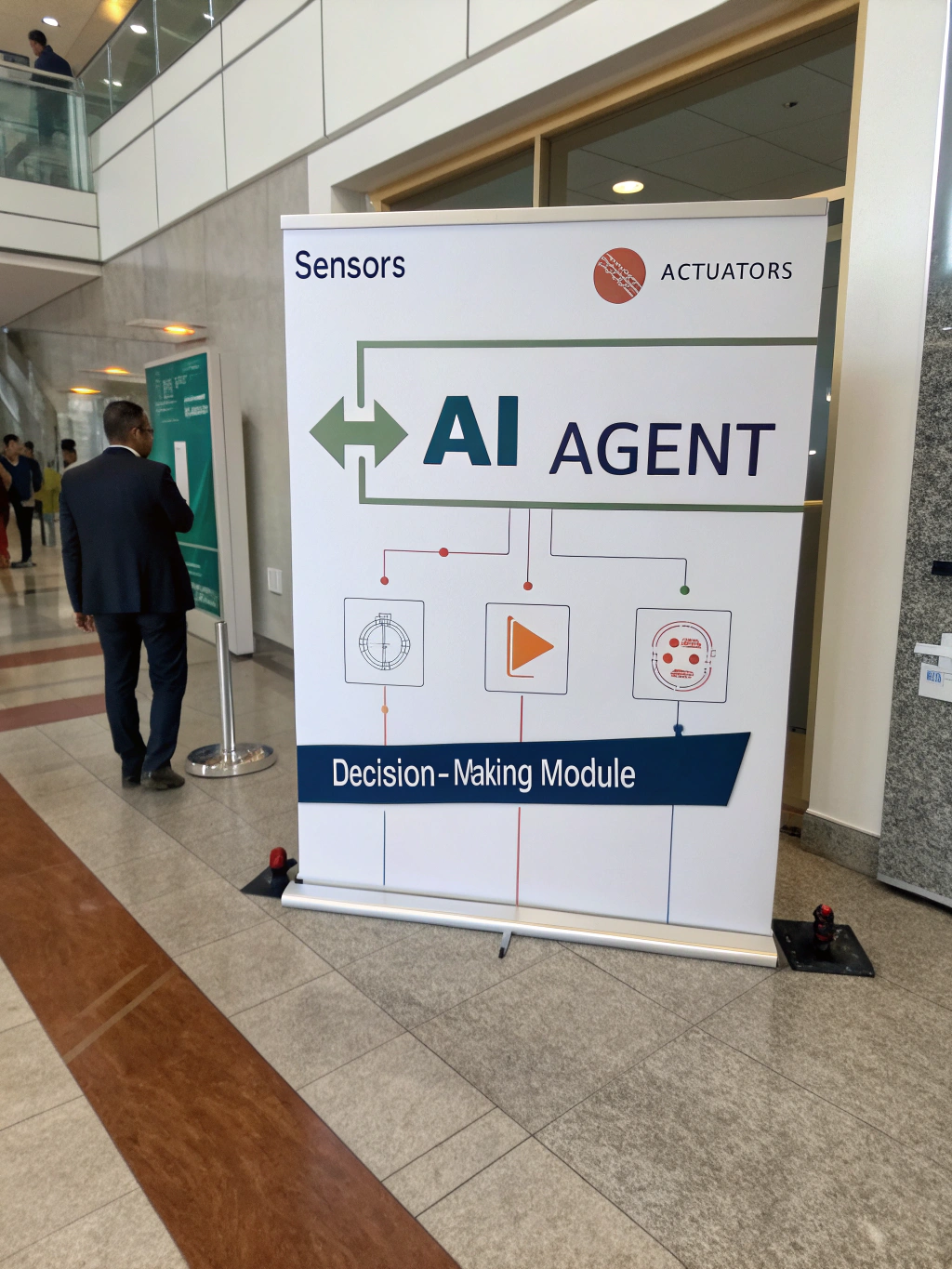
An AI agent, in this context, is essentially a software entity designed to perceive its environment, make decisions, and take actions to achieve specific goals. The architecture that underpins these agents is crucial. It’s the blueprint that dictates how different components interact to enable autonomous behavior. This architecture encompasses various elements, including perception modules for gathering data, reasoning engines for decision-making, and action modules for executing tasks. Understanding the fundamental building blocks of ai architecture is essential for anyone looking to leverage the power of intelligent automation.
Core Components of a Robust AI Agent
Several key components work in concert to create a powerful AI agent.
- Perception: This module is responsible for gathering information from the environment. This can involve processing text, images, audio, or sensor data. The quality of perception directly impacts the agent’s ability to make informed decisions.
- Reasoning: The reasoning engine uses algorithms and models to analyze the perceived information and determine the best course of action. This often involves techniques like machine learning, knowledge representation, and logic.
- Decision-Making: This component selects the optimal action based on the reasoning output and the agent’s predefined goals.
- Action: The action module translates the decision into a concrete action – whether it’s sending an email, updating a database, or controlling a physical device.
- Memory: Agents need to retain information from past interactions to improve performance and avoid repeating mistakes. This can involve short-term and long-term memory systems.
Why is a Well-Defined Architecture so Important?
A thoughtfully designed architecture is pivotal for several reasons. Firstly, it ensures scalability – the ability of the agent to handle increasing workloads and complexity. Secondly, it facilitates maintainability – making it easier to update and debug the system as requirements change. Thirdly, a solid architecture enhances security – protecting the agent from malicious attacks and ensuring data integrity. Without a well-defined framework, AI agents can become brittle and unpredictable, limiting their real-world applicability.
Practical Experience & Real Use Case: Automating Customer Support
Let’s consider a real-world scenario: automating customer support. Imagine building an AI agent to handle common customer inquiries.
Step 1: Data Collection & Preparation: Gather historical customer support data – chat logs, emails, frequently asked questions. Clean and format this data for machine learning models. Common beginner mistake: Insufficient data leads to poor performance. Fix: Ensure a diverse and representative dataset.
Step 2: Model Training: Train a natural language processing (NLP) model to understand customer intent. Utilize a combination of supervised and unsupervised learning techniques.
Step 3: Integration: Integrate the trained model with a customer support platform (e.g., Zendesk, Salesforce). The agent can then analyze incoming customer messages, identify the intent, and provide relevant responses or escalate complex issues to human agents.
Step 4: Continuous Improvement: Monitor the agent’s performance and retrain the model with new data to improve accuracy and address emerging customer needs. Common beginner mistake: Neglecting ongoing model refinement. Fix: Establish a regular retraining schedule and track key metrics.
Limitations and Drawbacks
While powerful, ai agent architecture isn’t a magic bullet. One key limitation is the “black box” nature of some models, making it difficult to understand why an agent made a particular decision. This lack of transparency can be problematic in sensitive applications. Another drawback is the need for significant computational resources and skilled personnel to develop and maintain these systems. Furthermore, current agents often struggle with nuanced or ambiguous situations that require human judgment. Tasks requiring creativity, empathy, or complex ethical considerations are still best handled by humans.
| Feature | Autonomous Agents | Human-in-the-Loop Systems |
|---|---|---|
| Autonomy | High | Low |
| Decision Speed | Fast | Slower |
| Cost | Potentially Lower | Potentially Higher |
| Complexity | High | Lower |
| Adaptability | Moderate | High |
Is it the Right Choice for Every Situation?
Automating repetitive tasks is where AI agents truly shine. However, for situations demanding intricate problem-solving skills, adaptability to unforeseen circumstances, or high levels of emotional intelligence, a human-in-the-loop approach might be more suitable.
Snippet-Ready Answer
AI agent architecture provides a framework for building autonomous software entities capable of perceiving, reasoning, and acting in their environment. By combining perception, reasoning, and action modules, these systems can automate complex tasks and improve efficiency.
Frequently Asked Questions
What are the essential elements of a strong AI agent design?
A well-designed AI agent needs effective perception for gathering data, a robust reasoning engine for decision-making, clear action modules for execution, and sufficient memory for learning from past experiences.
How does AI agent architecture differ from traditional software development?
Traditional software often relies on pre-programmed instructions, whereas AI agents learn and adapt through data, enabling them to handle more dynamic and unpredictable situations.
What are the biggest challenges in implementing AI agents?
Key challenges include managing large datasets, ensuring model transparency, and addressing ethical considerations related to autonomous decision-making.
Conclusion
ai agent architecture is driving a revolution in automation, offering unprecedented opportunities for businesses to enhance efficiency, reduce costs, and improve customer experiences. While challenges remain, the potential benefits are undeniable. The future is increasingly reliant on intelligent systems, and understanding the foundations of AI agent architecture is a critical step towards navigating this evolving landscape.
What are your thoughts on the future of AI agents? Share your comments and experiences below!
Share this content:







Post Comment