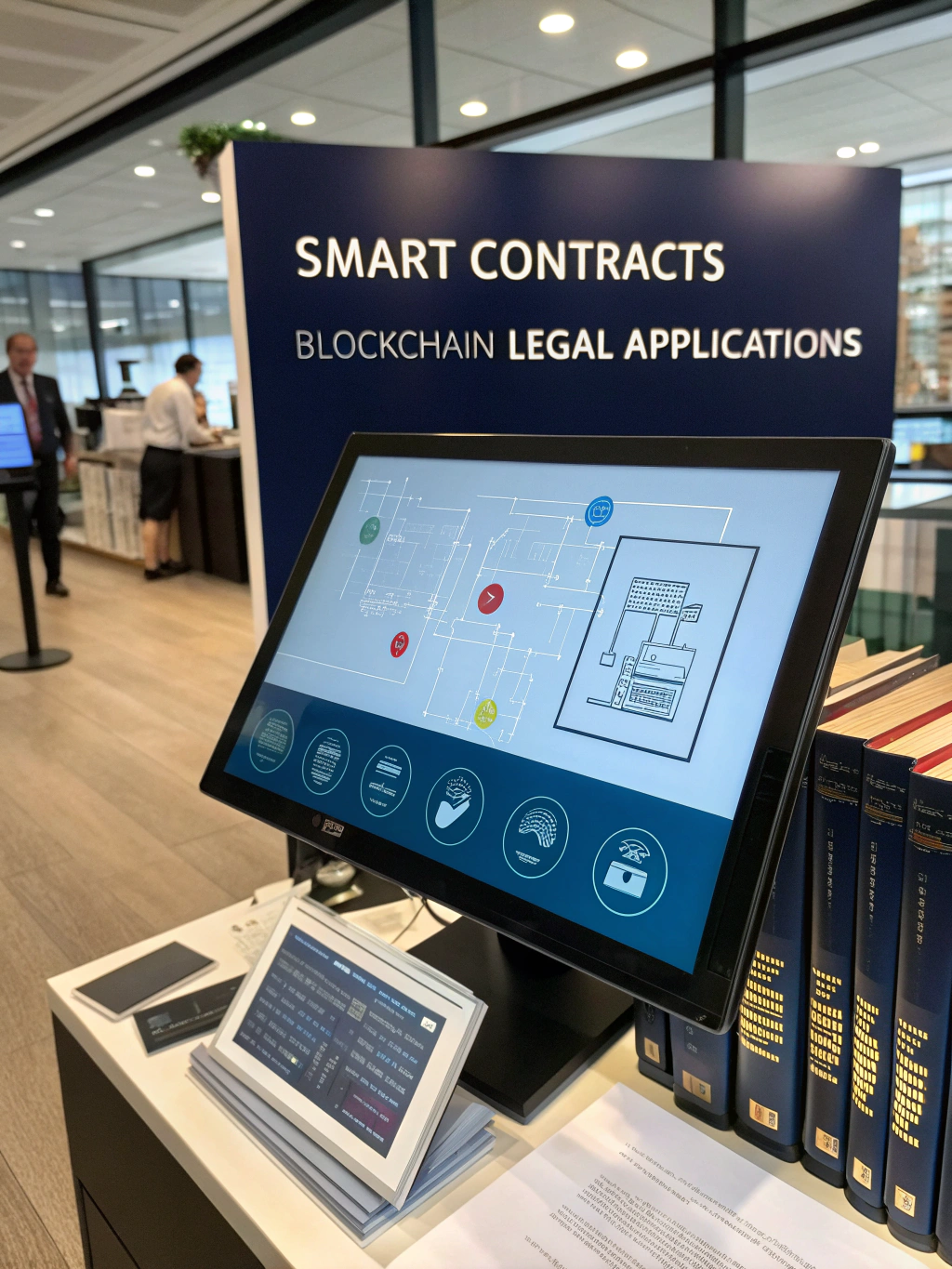
Code is Law: How Smart Contracts on the Blockchain Are Changing the Legal Landscape
Navigating the Future: Where Smart Contracts and Blockchain Law Meet Innovation
The digital revolution is reshaping industries at breakneck speed, and at the heart of this transformation lies blockchain technology. But with innovation comes complexity, particularly when it comes to navigating the legal landscape. Understanding smart contracts blockchain legal applications is no longer a niche concern; it’s a critical consideration for businesses, investors, and anyone engaging with decentralized systems. This post dives deep into the intersection of blockchain, smart contracts, and the evolving world of blockchain law, exploring its impact on social media, cryptocurrency markets, AI-driven automation, stock investments, and alternative investment strategies. We’ll break down the key challenges, emerging trends, and potential opportunities within this dynamic field.

The Rise of Smart Contracts: More Than Just Code
At its core, a smart contract is self-executing code stored on a blockchain. Think of it as a digital agreement that automatically enforces its terms when predefined conditions are met. This eliminates the need for intermediaries, reducing costs and increasing transparency. The potential applications are vast, touching nearly every sector.
- Supply Chain Management: Automating payments upon delivery confirmation.
- Real Estate: Streamlining property transactions and title transfers.
- Healthcare: Securely managing patient data and facilitating clinical trials.
- Voting Systems: Creating tamper-proof and transparent voting processes.
- Decentralized Finance (DeFi): Powering lending, borrowing, and trading platforms without traditional financial institutions.
However, the very nature of smart contracts – their immutability and reliance on code – presents unique legal challenges. The question of enforceability, liability in case of errors, and jurisdictional issues are actively being debated within the legal community. Understanding the nuances of blockchain law is crucial for businesses venturing into this space.
Legal Challenges in a Decentralized World
The inherent challenges in applying traditional legal frameworks to decentralized smart contracts are significant. Contractual enforceability is a major hurdle. If a smart contract malfunctions or produces an unintended outcome, who is responsible? Is it the developers, the users, or the blockchain itself?
Here’s a breakdown of key legal considerations:
- Enforceability: Can courts legally compel the execution of a smart contract? This is often tied to whether the contract’s terms are clear, unambiguous, and meet legal requirements for a valid agreement.
- Liability: Determining liability for errors in smart contract code is complex. Existing legal doctrines like negligence and breach of contract may be applicable, but their application is uncertain.
- Jurisdiction: Blockchains are global and borderless. Determining which jurisdiction’s laws apply to a smart contract dispute can be difficult.
- Data Privacy: Smart contracts often handle sensitive data, raising concerns about compliance with data protection regulations like GDPR.
- Regulation: The regulatory landscape for cryptocurrencies and blockchain technology is still evolving, creating uncertainty for businesses.
AI Agents and Automation: A Synergistic Future
The convergence of AI agents and blockchain is creating powerful synergies. AI agents, powered by machine learning, can analyze data, automate tasks, and even execute smart contract logic. This integration has transformative implications for various sectors.
- Automated Compliance: AI agents can monitor smart contracts for compliance with regulations, alerting users to potential violations.
- Risk Management: AI can analyze blockchain data to identify and mitigate risks associated with smart contract deployments.
- Enhanced Security: AI-powered security systems can detect and prevent attacks on smart contracts.
- Personalized Investment Strategies: AI agents can analyze market data and automate investment decisions based on individual risk profiles, leveraging the transparency of blockchain data.
The rise of AI agents also brings new legal complexities. Who is responsible when an AI agent makes an error that results in financial loss? How can we ensure that AI agents are used ethically and responsibly in the context of blockchain technology?
Blockchain’s Impact on Investment Strategies
Blockchain technology is disrupting traditional investment models, opening up new avenues for investors.
- Cryptocurrency Investments: Bitcoin, Ethereum, and other cryptocurrencies offer potential for high returns but also come with significant volatility. Understanding the regulatory environment and conducting thorough due diligence are essential.
- Initial Coin Offerings (ICOs) and Security Token Offerings (STOs): These offer alternative ways to raise capital and access investment opportunities, but they also carry higher risks. Compliance with securities regulations is paramount.
- Decentralized Exchanges (DEXs): DEXs allow users to trade cryptocurrencies directly with each other, bypassing traditional exchanges. This offers greater privacy and control, but also introduces new security risks.
- Alternative Investments: Blockchain enables tokenization of real-world assets like art, real estate, and commodities, making them more accessible to investors.
| Investment Strategy | Blockchain Application | Risks | Potential Rewards |
|---|---|---|---|
| Cryptocurrency Investing | Stablecoins, DeFi platforms | Volatility, regulatory uncertainty, security breaches | High returns, decentralized control |
| Security Token Offerings (STOs) | Tokenizing equity in companies | Regulatory risk, illiquidity, due diligence required | Access to early-stage investment opportunities |
| Decentralized Finance (DeFi) | Lending/Borrowing Protocols, Yield Farming | Smart contract risk, impermanent loss, rug pulls | High yields, automated financial services |
| Tokenized Real Estate | Fractional ownership through tokens | Market volatility, legal complexities, regulatory challenges | Increased liquidity, lower investment barriers |
The Future of Smart Contracts & Blockchain Law: What’s Next?
The legal framework surrounding smart contracts blockchain legal applications is still in its early stages of development. Expect to see increased regulatory scrutiny, the emergence of specialized legal expertise in blockchain law, and the development of standardized smart contract templates. The intersection of blockchain law and AI will also be a key area of focus.
As blockchain technology matures, so too will the legal landscape. Those who proactively understand the risks and opportunities associated with smart contracts and blockchain will be best positioned to thrive in this rapidly evolving environment.
Ready to delve deeper? Share your thoughts on the future of smart contracts and blockchain law in the comments below! Don’t forget to subscribe to our newsletter for more insights on the latest tech trends. You can also explore our resources on Blockchain Technology and AI Agents
Share this content:













Post Comment