Ai Tools For Small Business Automation
Streamline Your Business: The Power of Automation with Smart Technologies
Running a small business often feels like juggling a dozen things at once. From customer service to marketing, and even administrative tasks, the workload can be overwhelming. Thankfully, a new wave of technology is emerging to help. AI tools for small business automation are no longer a futuristic fantasy; they’re practical solutions readily available to boost efficiency, reduce costs, and free up your time to focus on growth. This guide will explore the world of automation, showcasing real-world applications and helping you navigate the options to find the perfect fit for your business.
What Does Automation Mean for Your Small Business?
At its core, automation is using technology to perform repetitive tasks without human intervention. This isn’t about replacing employees, but rather empowering them to focus on higher-value activities that require creativity, strategic thinking, and interpersonal skills. Think of it as having a tireless virtual assistant handling the mundane, allowing you and your team to concentrate on innovation and customer relationships. The benefits are significant: increased productivity, reduced errors, and improved customer satisfaction.
Automating Customer Interactions with Smart Chatbots
One of the most impactful ways to leverage automation is through chatbots. These virtual assistants can handle a large volume of customer inquiries 24/7, providing instant responses to frequently asked questions, guiding customers through processes, and even collecting lead information. Implementing a chatbot can significantly improve response times and ensure no customer feels ignored.
- Use Case: A small e-commerce store can use a chatbot to answer questions about shipping policies, product availability, and order tracking, freeing up the customer service team to address more complex issues.
- Tools to explore: Many platforms offer chatbot builders, ranging from simple rule-based systems to more advanced solutions using natural language processing. Consider options like ManyChat or Tidio.
Simplifying Marketing with AI-Powered Tools
Marketing automation tools are revolutionizing how businesses engage with their audiences. AI can help personalize marketing messages, optimize content for better reach, and even automate social media posting. This translates to more effective campaigns and a higher return on investment.
- Personalized Email Marketing: AI algorithms can analyze customer data to send targeted email campaigns with personalized product recommendations and offers. This is far more effective than generic newsletters.
- Social Media Scheduling & Optimization: Tools can automatically schedule posts at optimal times for engagement and analyze performance to refine your social media strategy.
- Content Creation Support: While not fully replacing human writers, some tools can assist with generating blog post ideas, outlines, and even draft content.
Streamlining Operations with Workflow Automation
Beyond customer service and marketing, automation can streamline internal business processes. This includes automating tasks like data entry, invoice processing, and appointment scheduling.
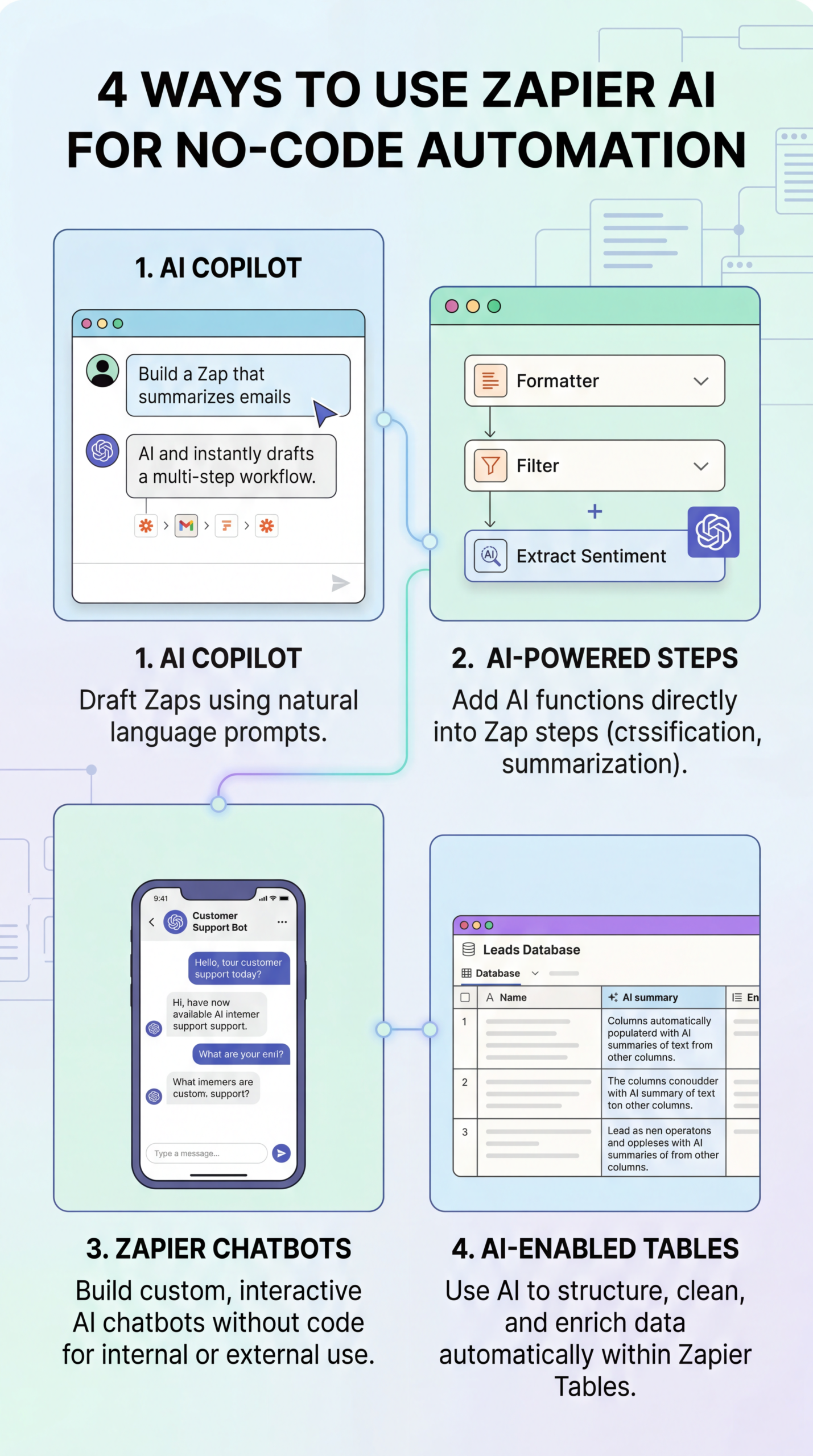
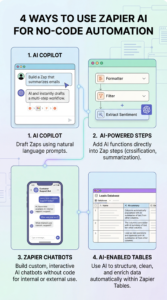
- Zapier & IFTTT: These platforms connect different apps and automate workflows between them. For example, you can automatically save email attachments to Google Drive or create a task in your project management tool when a new lead is captured.
- Robotic Process Automation (RPA): For more complex, rule-based tasks, RPA software can mimic human actions to automate processes across different systems. This requires a bit more technical setup but can yield significant efficiency gains.
Practical Experience & Real Use Case
Let’s say you run a small online tutoring business. You spend a lot of time scheduling lessons, sending reminders, and invoicing clients. Initially, you manually managed everything using a spreadsheet. This was time-consuming and prone to errors. You started by integrating Calendly with your Google Calendar to automate appointment scheduling. This alone saved you several hours a week. Next, you used Zapier to automatically send appointment reminders via SMS and email.
Common beginner mistakes? Trying to automate everything at once! Start with the most repetitive and time-consuming tasks. Another pitfall is neglecting data accuracy. If the data feeding your automation tools is flawed, the results will be flawed too. Fix this by regularly reviewing and cleaning your data.
Limitations & When Automation Isn’t the Answer
While automation offers tremendous benefits, it’s not a silver bullet. It’s crucial to recognize its limitations. Highly nuanced or emotionally driven tasks, such as complex customer service issues requiring empathy or creative problem-solving, are still best handled by humans. Also, implementing automation requires an initial investment of time and resources for setup and training.
Evaluating Your Options: A Quick Comparison
| Tool/Platform | Primary Focus | Cost | Ease of Use | Best For |
|---|---|---|---|---|
| Calendly | Appointment Scheduling | Free (basic), Paid plans | Very Easy | Service-based businesses needing easy scheduling |
| Zapier | Workflow Automation | Free (limited), Paid plans | Moderate | Connecting different apps and automating tasks |
| ManyChat | Chatbot Building | Free (limited), Paid plans | Easy | Customer support, lead generation |
| Mailchimp | Email Marketing | Free (limited), Paid plans | Moderate | Email newsletters, marketing campaigns |
| Quickbooks Online | Accounting & Invoicing | Paid plans | Moderate | Managing finances and automating invoicing |
Quick Answer: What’s the most impactful starting point for automation?
Automating appointment scheduling using tools like Calendly is often the quickest and easiest way for small businesses to experience the benefits of automation. It immediately frees up valuable time typically spent on back-and-forth emails and manual calendar management.
Frequently Asked Questions
How can I determine which tasks in my business are best suited for automation?
Start by identifying tasks that are repetitive, rule-based, and consume a significant amount of your time. These are prime candidates for automation.
Is implementing automation expensive for a small business?
The cost of automation varies widely. Many affordable or even free tools are available for basic automation needs, while more advanced solutions require a larger investment.
What kind of technical skills are required to use automation tools?
Many automation tools are designed to be user-friendly and require minimal technical expertise. However, some more advanced solutions may necessitate a bit of learning.
Can automation tools improve customer satisfaction?
Absolutely. Faster response times, personalized communication, and streamlined processes all contribute to a better customer experience.
What are the potential risks of relying too heavily on automation?
Over-reliance on automation can lead to impersonal customer interactions and a lack of human touch. It’s crucial to find a balance between automation and human involvement.
Embracing the Future: Automation for Small Business Success
AI tools for small business automation are empowering business owners to work smarter, not harder. By identifying key areas for automation and leveraging the right technologies, you can unlock significant efficiency gains and focus on what truly matters – growing your business and serving your customers.
Ready to explore how smart technologies can transform your business? Share your thoughts in the comments below, or check out our other articles on digital marketing strategies and financial planning for startups.
Share this content:





Post Comment