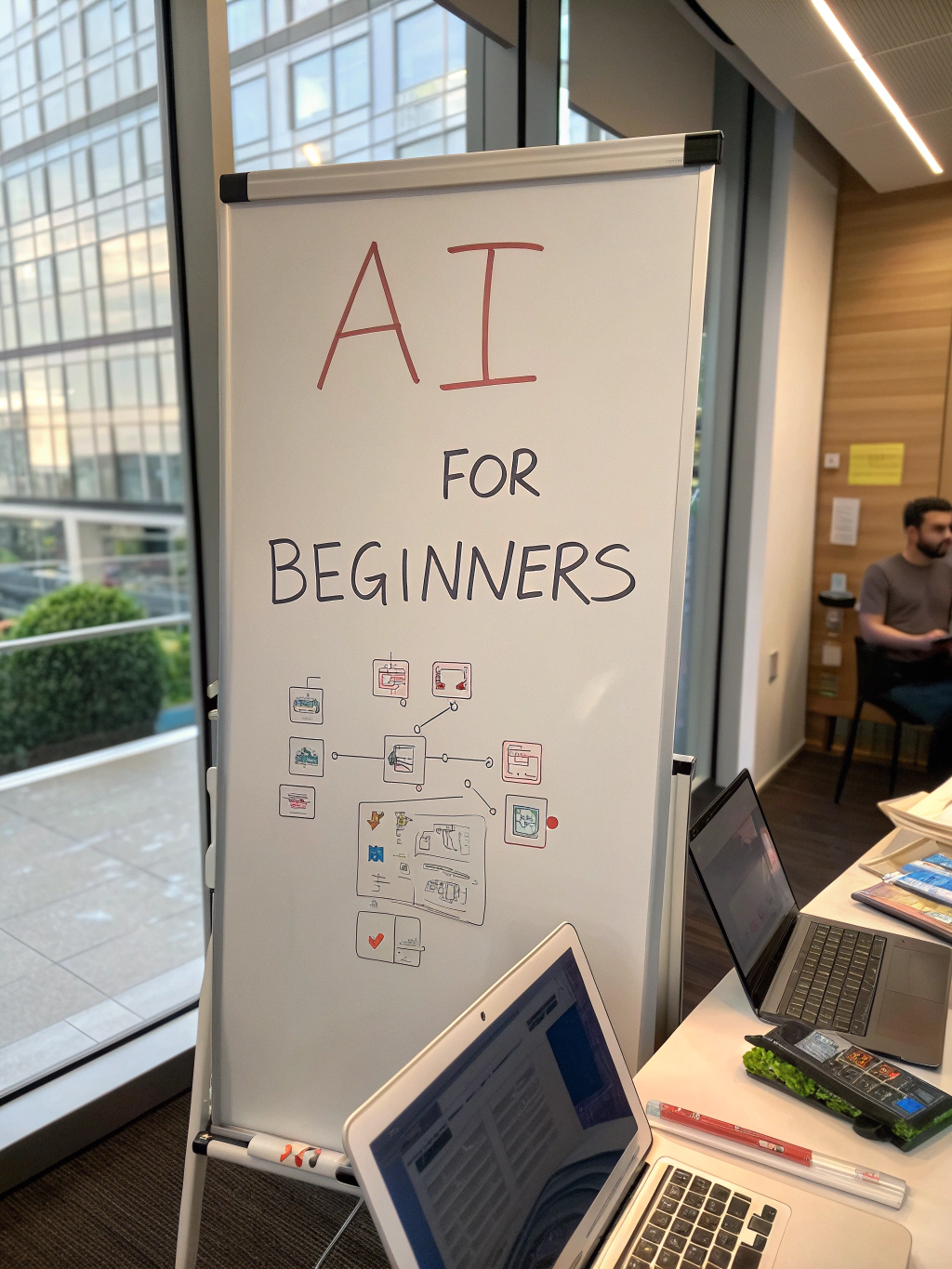
Ai For Beginners Explained
Demystifying the Intelligence Revolution: A Beginner’s Guide
The buzz around artificial intelligence is deafening. From self-driving cars to personalized recommendations, it feels like intelligent machines are rapidly transforming our world. But what exactly is it? And how can someone without a technical background begin to understand and even utilize this powerful technology? This comprehensive guide will break down AI for beginners explained in simple terms, exploring its core concepts, practical applications, and the exciting possibilities it holds for everyone.
What Exactly Is Artificial Intelligence?
At its heart, artificial intelligence is about creating computer systems that can perform tasks that typically require human intelligence. Think learning, problem-solving, decision-making, and even understanding language. It’s not about building robots that take over the world (at least, not yet!). Instead, it’s about developing algorithms and models that allow machines to process data, identify patterns, and act accordingly.
There are different levels of AI. Some systems are designed for very specific tasks – like recommending products you might like. Others aim for more general intelligence, meaning they can handle a wider variety of problems. While achieving truly general intelligence remains a long-term goal, the AI we interact with today is already making a significant impact on our lives.
Key Concepts to Grasp
Understanding some fundamental concepts is key to grasping AI for beginners explained:
- Machine Learning (ML): This is a core subset of AI where systems learn from data without being explicitly programmed. Imagine teaching a computer to identify cats in pictures – you don’t tell it how a cat looks; you show it thousands of cat images.
- Deep Learning: A more advanced form of machine learning that uses artificial neural networks with multiple layers to analyze data. This allows for incredibly complex pattern recognition.
- Natural Language Processing (NLP): This field focuses on enabling computers to understand, interpret, and generate human language. Think of chatbots or voice assistants.
AI in Action: Everyday Examples
You encounter AI far more often than you might realize. Here are some familiar examples:
- Streaming Recommendations: Services like Netflix and Spotify use AI to suggest movies and music you might enjoy based on your viewing and listening history.
- Virtual Assistants: Siri, Alexa, and Google Assistant utilize NLP to respond to your voice commands and provide information.
- Spam Filters: Email providers use machine learning to identify and filter out unwanted messages.
- Navigation Apps: Google Maps and Waze use AI to analyze traffic patterns and provide the fastest routes.
AI for beginners explained examples are increasingly integrated into our daily routines, making tasks easier and more efficient.
Getting Started with AI: It’s Easier Than You Think
You don’t need a computer science degree to explore the world of AI. There are numerous accessible tools and resources available for beginners.
- No-Code AI Platforms: Platforms like [insert example platform] allow you to build and deploy AI models without writing any code. This is a great starting point for experimenting with AI concepts.
- Online Courses: Websites like Coursera, Udacity, and edX offer a wide range of introductory courses on machine learning and AI.
- AI-Powered Tools: Many everyday tools now incorporate AI. For instance, grammar checkers like Grammarly use NLP.
Practical Experience & Real Use Case: Email Categorization
Let’s say you’re overwhelmed with email inboxes. You can use an AI-powered tool to automatically categorize your emails.
Step 1: Choose an AI-powered email assistant (many email providers are starting to include this functionality natively).
Step 2: Train the system by manually categorizing a few emails (e.g., “Work,” “Personal,” “Newsletters”). This helps the AI learn your preferences.
Step 3: Let the AI do the work! It will then automatically categorize new emails based on their content.
Common Beginner Mistakes:
- Not providing enough training data: The AI needs examples to learn effectively. Not categorizing enough emails will lead to inaccurate classifications.
- Ignoring the AI’s suggestions: While the AI is helpful, it’s not perfect. Review the categorizations and correct any errors to further train the system.
Fix: Dedicate a little time each week to reviewing and refining the AI’s categorizations.
Limitations and Drawbacks
While incredibly powerful, AI for beginners explained isn’t a magic bullet.
- Data Dependency: AI models are only as good as the data they are trained on. Biased data can lead to biased outcomes.
- Lack of Explainability: Some advanced AI models, like deep learning networks, can be difficult to understand – it’s hard to know why they made a particular decision (often referred to as the “black box” problem).
- Cost and Complexity: Building and deploying sophisticated AI systems can be expensive and require specialized expertise.
AI Tools Comparison
| Tool | Price | Ease of Use | Key Features | Best For |
|---|---|---|---|---|
| [Tool A Name] | Free/Paid | Beginner-Friendly | Automated data analysis, predictive modeling | Small businesses, individual projects |
| [Tool B Name] | Paid | Intermediate | Advanced machine learning, custom model building | Data scientists, enterprise applications |
| [Tool C Name] | Free/Paid | Intermediate | NLP tasks, chatbot development | Customer service, content generation |
Snippet-Ready Answer
What’s the most common application of AI currently?
Predictive analytics is a widely used application of AI. Businesses use it to forecast future trends, optimize operations, and make data-driven decisions. For example, predicting customer churn or demand fluctuations.
The Future is Intelligent: A Call to Explore
The field of artificial intelligence is evolving at an incredible pace, and AI for beginners explained is just the beginning. While complex concepts underpin its development, the core ideas are accessible to everyone.
Frequently Asked Questions
What skills do I need to start learning about AI?
You don’t necessarily need advanced technical skills to begin. Basic understanding of data and willingness to learn online are sufficient to start exploring concepts and tools.
Is AI going to replace human jobs?
While AI will automate some tasks, it will also create new job opportunities. The focus will shift towards roles involving AI development, maintenance, and strategic application.
How can I learn more about AI without a technical background?
There are many online courses, tutorials, and beginner-friendly resources available that don’t require coding experience – explore platforms like Coursera and edX.
What is the difference between machine learning and deep learning?
Machine learning is a broader concept, and deep learning is a subfield of machine learning using artificial neural networks with multiple layers for more complex pattern recognition.
Can AI be used for creative tasks?
Absolutely! AI tools are increasingly being used for creative applications like generating art, writing content, and composing music, though the level of creativity is still evolving.
Ready to dive deeper? Share your thoughts and experiences with AI in the comments below! Don’t forget to subscribe for more insights into the future of technology.
Share this content:



Post Comment