How to Build an AI Agent Workflow for Content Marketing in 2026
Unlock Content Velocity: Building an AI Agent Workflow for Content Marketing in 2025
The content landscape is shifting dramatically. Staying ahead in 2025 requires embracing new strategies, and at the forefront of that is leveraging intelligent automation. If you’re looking to scale your content production and reclaim valuable time, understanding how to build an ai agent workflow for content marketing in 2025 is no longer optional – it’s essential. This isn’t about replacing human creativity, but amplifying it. This guide will walk you through building a robust workflow, covering everything from initial setup to ongoing optimization, empowering your team to create more content, faster.
Laying the Foundation: Defining Your Content Needs
Before diving into tools and technologies, take a step back to understand your content gaps and goals. What types of content are you producing? Blog posts, social media updates, email newsletters, video scripts? What are your key performance indicators (KPIs)? Increased website traffic, lead generation, brand awareness?
A clear understanding of these fundamentals will guide your workflow design. It’s also vital to identify processes ripe for automation. Repetitive tasks like keyword research, competitor analysis, and initial draft creation are prime candidates. Don’t forget to consider content repurposing – transforming a long-form blog post into a series of social media snippets, for example.
Core Components of Your AI Agent Workflow
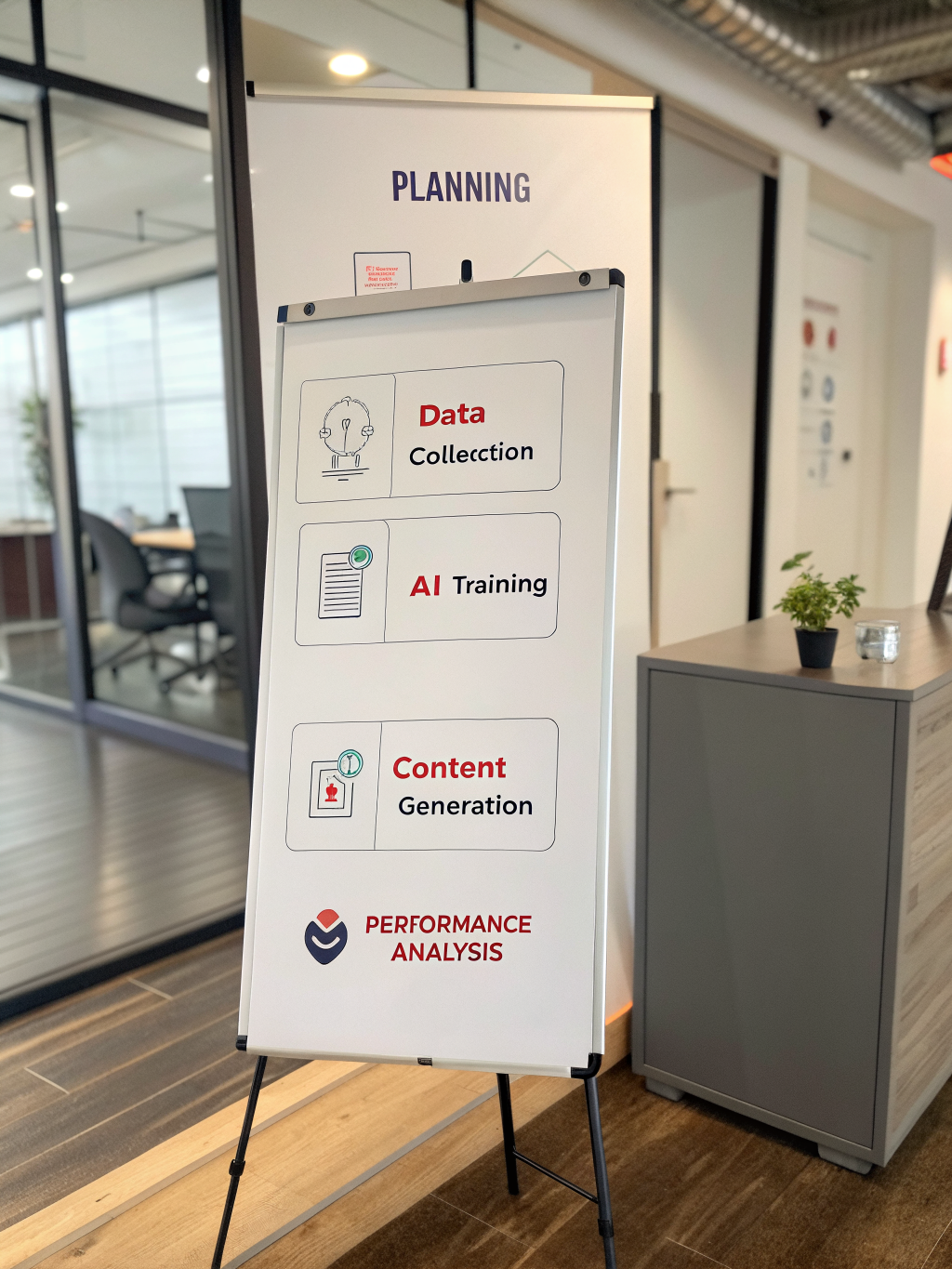
A successful workflow isn’t about a single tool – it’s about integrating several to achieve a cohesive process. Here’s a breakdown of the key components:
Intelligence Engine: This is the core of your workflow – the platform that handles the processing and generation of content. Options range from versatile suites to specialized tools.
Data Integration Layer: Seamlessly connect your intelligence engine to your existing data sources: CRM, marketing automation platforms, analytics dashboards. This feeds the engine with the information it needs to tailor content to your target audience.
Workflow Automation Platform: This acts as the conductor, orchestrating the different components and automating the flow of information between them.
Human Review & Refinement: Crucially, human oversight remains indispensable. AI-generated content should always be reviewed, edited, and refined to ensure accuracy, brand voice consistency, and overall quality.
Automating the Content Creation Lifecycle
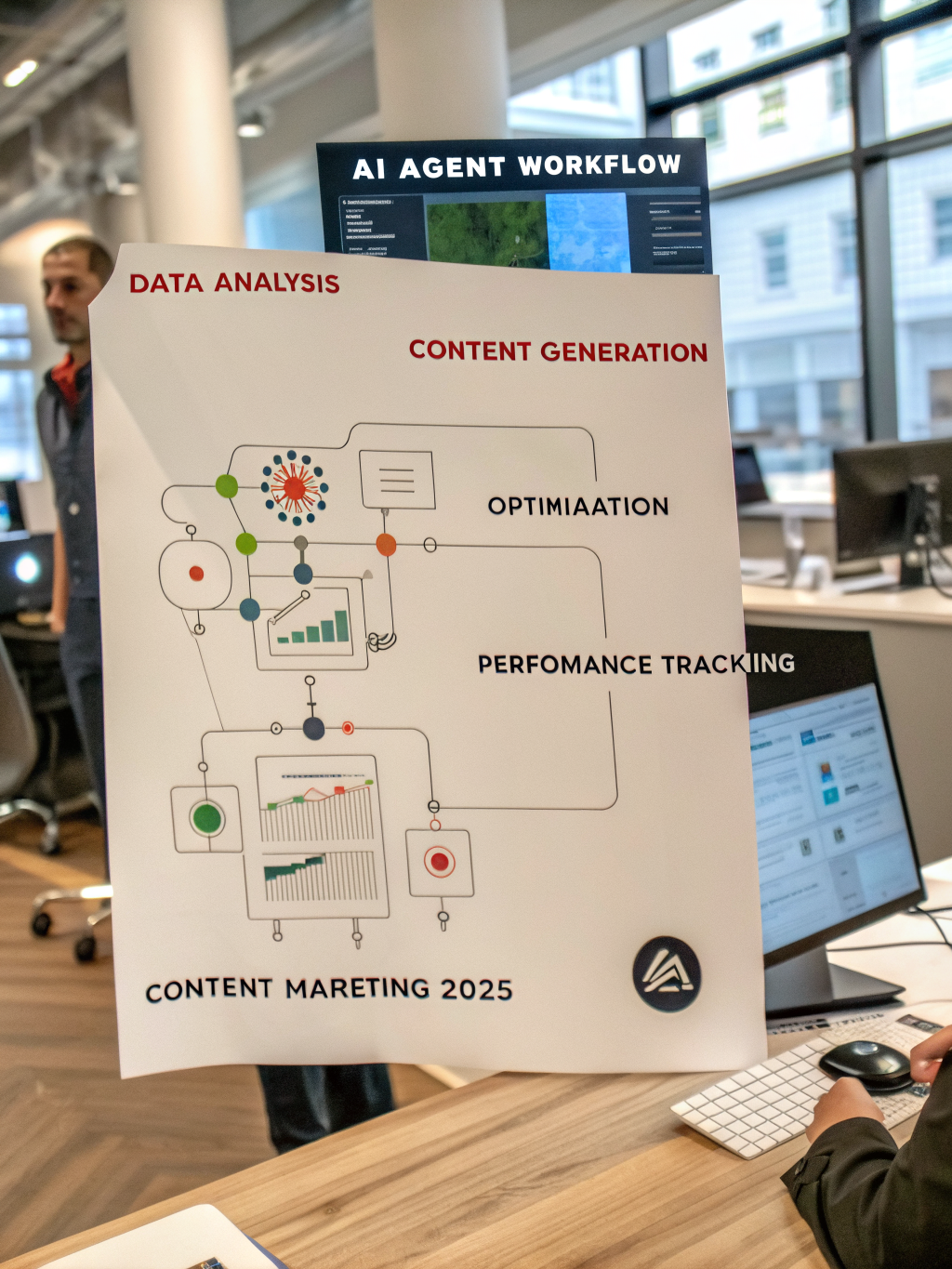
Let’s explore how to automate specific stages within your content lifecycle:
Ideation & Research: Use the intelligence engine to brainstorm topic ideas based on trending keywords, competitor analysis, and audience interests. Tools can quickly sift through vast amounts of data to identify opportunities.
Outline Generation: Automate the creation of detailed outlines. Input your topic, and the engine will generate a structured framework with headings, subheadings, and potential key points.
Drafting & Content Generation: The engine can then generate initial drafts based on the outline. This is where AI truly shines in dramatically reducing initial writing time.
Optimization & Editing: Once a draft is generated, it can be optimized for SEO using keyword suggestions and readability analysis. The workflow can also flag potential grammatical errors or stylistic inconsistencies.
Distribution & Promotion: Automate the scheduling and distribution of content across various channels (social media, email, etc.) using integration with your marketing automation platform.
Practical Experience & Real Use Case
Let’s consider a scenario involving a B2B SaaS company wanting to boost blog content output.
The Challenge: The marketing team struggles to publish at least two high-quality blog posts per week, but lacks the bandwidth.
The Solution: They implement an how to build an ai agent workflow for content marketing in 2025, integrating a content intelligence platform, a workflow automation tool, and their existing CRM.
Step-by-step:
- Keyword Research: The platform identifies high-volume, low-competition keywords related to their industry.
- Outline Generation: The tool creates outlines for 8 potential blog post topics.
- Drafting: The engine generates initial drafts for the top 3 outlines.
- Human Editing: A content specialist reviews and refines the drafts, adding industry-specific insights and ensuring brand consistency.
- SEO Optimization: The workflow tool optimizes the draft for on-page SEO, including keyword integration and meta description creation.
- Scheduling & Distribution: Automated scheduling deploys the finished posts across LinkedIn, Twitter, and their email newsletter.
Common Mistakes and Fixes:
- Mistake: Relying solely on AI-generated content without human review.
Fix: Always have a human editor review and refine the output. - Mistake: Poorly defined workflow leading to bottlenecks.
Fix: Map out the entire process and identify potential pain points.
Limitations and Drawbacks
While incredibly powerful, how to build an ai agent workflow for content marketing in 2025 isn’t a silver bullet. AI-generated content can sometimes lack originality, creativity, or a nuanced understanding of complex topics. It’s also vulnerable to inaccuracies or biased information if the underlying data isn’t carefully curated. There are scenarios where it’s not the best choice: highly sensitive topics demanding absolute accuracy, or content requiring deep emotional intelligence.
Comparison of AI Content Tools
| Feature | Jasper.ai | Copy.ai | Rytr |
|---|---|---|---|
| Pricing | Starts at $49/month | Starts at $49/month | Starts at $9/month |
| Content Quality | High | Good | Variable |
| Ease of Use | Moderate | Easy | Very Easy |
| Features | Extensive | Good range | Basic |
Key Takeaway: Speed and Efficiency
Consider this: a business that can consistently produce higher-quality content, faster, will inevitably gain a competitive edge. The right how to build an ai agent workflow for content marketing in 2025 positions your team to scale content efforts without sacrificing quality.
Frequently Asked Questions
What are the essential steps to implement an AI agent workflow for content marketing?
The first step involves defining your content needs and goals. Then, select the right tools and integrate them into a streamlined workflow, focusing on data flow and human oversight.How can I ensure the content generated by an AI agent is accurate?
Regularly review and fact-check AI-generated content, especially when dealing with technical or sensitive topics. Utilize reliable data sources and implement quality control measures.What are the typical costs associated with building an AI agent workflow?
Costs vary widely depending on the tools and resources you choose. Expect to invest in software subscriptions (ranging from a few dollars per month to hundreds), potentially consulting fees, and the time spent on workflow setup and training.Does using AI for content creation negatively impact SEO?
Not necessarily. High-quality, valuable content is still king. AI can assist with SEO tasks (keyword research, optimization), but ultimately, focusing on providing excellent content remains crucial.What kind of skills are needed to manage an AI agent workflow?
A combination of marketing expertise, technical understanding (to manage the platforms), and strong editing skills is essential.
Ready to Supercharge Your Content?
Building an efficient content engine requires careful planning and execution. Start small, experiment with different tools, and continuously refine your workflow based on results.
What are your biggest challenges in content marketing right now? Share your thoughts in the comments below! You can also explore our related articles on content strategy and marketing automation.
Share this content:











Post Comment