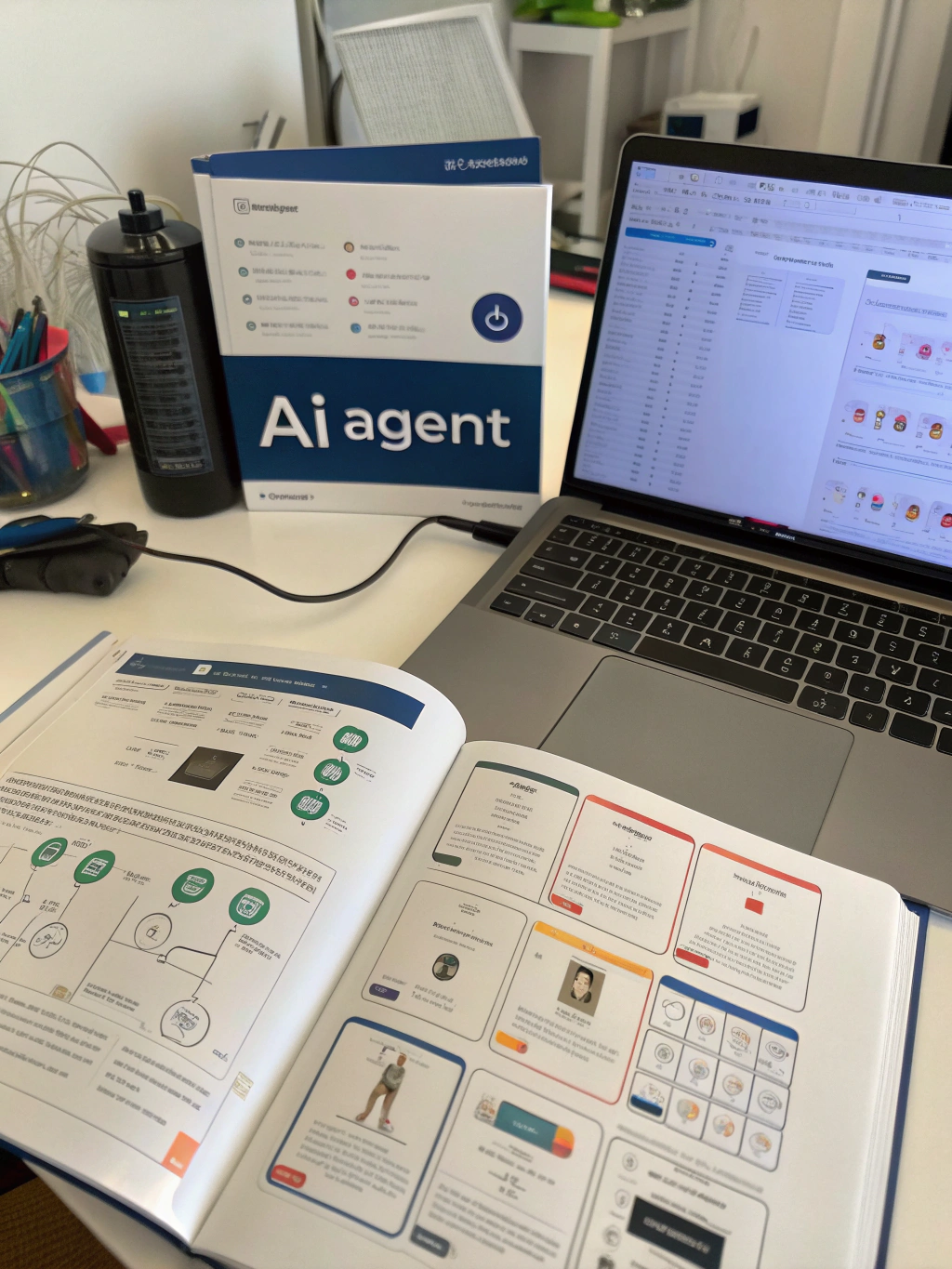
AI Agent Tutorial: Build Your First Agent
Unlock Efficiency: Your Comprehensive Guide to AI Agents
The world of technology is rapidly evolving, with artificial intelligence (AI) playing an increasingly central role in how we work and live. At the forefront of this transformation are AI agents – sophisticated programs designed to automate tasks and enhance productivity. This article serves as an in-depth ai agent tutorial, providing you with a clear understanding of what these powerful tools are, how they work, and how you can leverage them to streamline various aspects of your life and business. This ai agent guide will explore practical applications, potential pitfalls, and how to get started.
What Exactly Are AI Agents?
Think of an AI agent as a virtual assistant on steroids. Unlike traditional scripts or simple automation tools, AI agents possess a degree of autonomy. They can perceive their environment, reason about it, and take actions to achieve specific goals – often without constant human intervention. They’re built with advanced algorithms that allow them to learn, adapt, and even make decisions based on the data they process. This capability opens up a vast array of possibilities, from automating customer service inquiries to managing complex workflows. They are a step beyond simple automation and offer genuine cognitive ability within defined parameters.
Key Capabilities of Modern AI Agents
AI agents aren’t a one-size-fits-all solution. Their capabilities vary depending on their design and intended purpose, but some common strengths include:
- Task Automation: Automating repetitive, time-consuming tasks like data entry, scheduling, and report generation.
- Information Gathering & Summarization: Quickly extracting and synthesizing information from multiple sources.
- Decision Support: Providing data-driven insights and recommendations to aid in decision-making.
- Workflow Orchestration: Managing and coordinating complex sequences of tasks.
- Personalized Interactions: Offering tailored experiences based on individual user needs and preferences.
Navigating the Landscape: Types of AI Agents
The AI agent space is diverse, with different types catering to specific needs. Understanding these distinctions is crucial when choosing the right tool for the job. Here’s a brief overview:
- Software Agents: These operate within software applications, automating tasks within those platforms (e.g., an agent for managing social media posts).
- Web Agents: These interact with websites, scraping data, filling out forms, or performing other web-based tasks.
- Mobile Agents: Designed for mobile devices, these agents can perform actions based on location, device sensors, and user input.
- Process Automation Agents: These agents excel at automating complex business processes, often integrating with various enterprise systems.
Practical Experience & Real Use Case: Automating Content Research
Let’s consider a real-world scenario: content marketing. A content creator spends significant time researching topics, gathering information, and compiling data for blog posts. An AI agent can significantly streamline this process.
- Goal Definition: The creator defines the research objective – e.g., “Find the top 10 trending topics in web development for beginners.”
- Agent Selection: A suitable web agent is selected, one with strong search and data extraction capabilities (e.g., one capable of sifting through industry forums, news sites, and research papers).
- Agent Execution: The agent is launched and begins scouring the internet according to the defined criteria.
- Data Analysis & Summarization: The agent filters and summarizes the gathered information, highlighting key trends and statistics.
- Output Integration: The summarized findings are presented in a structured format (e.g., a spreadsheet or a document), ready for the content creator to use.
Common Mistakes Beginners Make (and How to Fix Them):
- Overly Broad Objectives: Starting with a vague objective (e.g., “research marketing”) leads to overwhelming and irrelevant results. Fix: Be specific. “Analyze customer sentiment towards brand X on Twitter over the last month” is far more actionable.
- Ignoring Data Validation: AI agents aren’t infallible. They can sometimes generate inaccurate or outdated information. Fix: Always cross-reference the agent’s findings with reputable sources.
Using an AI agent to automate even part of content research frees up valuable time, allowing creators to focus on writing high-quality content.
Limitations and Drawbacks
While promising, AI agents aren’t without their limitations. One significant drawback is their reliance on data quality. If the data they are trained on or access is biased or incomplete, the agent’s performance will be compromised. Another concern is the potential for errors and unexpected behavior, especially when dealing with complex or ambiguous tasks. Furthermore, over-reliance on automated systems can diminish critical thinking and problem-solving skills. Also, the cost of some advanced AI agent platforms can be substantial, especially for smaller businesses.
AI Agent Comparison: Key Features
| Feature | AgentX | AgentY | AgentZ |
|---|---|---|---|
| Pricing | Subscription-based, tiered | Pay-per-use | Enterprise licensing |
| Integration | API, Zapier, IFTTT | API, Webhooks | Custom integration & SDK |
| Data Sources | Web, Databases, Cloud Storage | Web, Social Media, APIs | Proprietary data, Web, Databases |
| Learning Capabilities | Machine learning, Natural Language Processing | Machine Learning, Pattern Recognition | Advanced AI, Predictive Analytics |
| Ease of Use | User-friendly interface | Developer-focused, API-driven | Requires technical expertise |
The Future of Automation: What’s Next for this Technology?
The development of AI agents is progressing at a rapid pace. We can expect to see increased sophistication in their capabilities, a wider range of applications, and improved integration with existing technologies. The move towards more personalized, context-aware agents is also a key trend.
Frequently Asked Questions
What is the primary benefit of using an ai agent?
AI agents automate tasks and improve efficiency by performing activities that typically require human intervention.
How can I get started with an ai agent tutorial?
Explore various online resources, including this guide, to understand the fundamentals and available tools. Start with a simple task to gain practical experience.
Are AI agents expensive to implement?
The cost varies depending on the agent’s complexity and the vendor’s pricing model, ranging from free options to enterprise-level subscriptions.
Can AI agents handle complex decision-making?
While they can provide data-driven insights, AI agents typically operate within predefined parameters and may require human oversight for critical decision-making processes.
What are the ethical considerations surrounding the use of AI agents?
It’s essential to address issues like data privacy, algorithmic bias, and job displacement when implementing AI agents.
Conclusion
AI agents represent a significant leap forward in automation and intelligent systems. By understanding their capabilities, limitations, and potential applications, you can leverage these tools to boost productivity, streamline workflows, and unlock new possibilities. While not a magic bullet, incorporating AI agents strategically can significantly enhance how you approach various tasks.
Ready to explore further? Share your thoughts on how you envision using ai agent tutorials in your workflow in the comments below! Don’t forget to check out our article on best tools for productivity for more insights.
Share this content:












Post Comment